
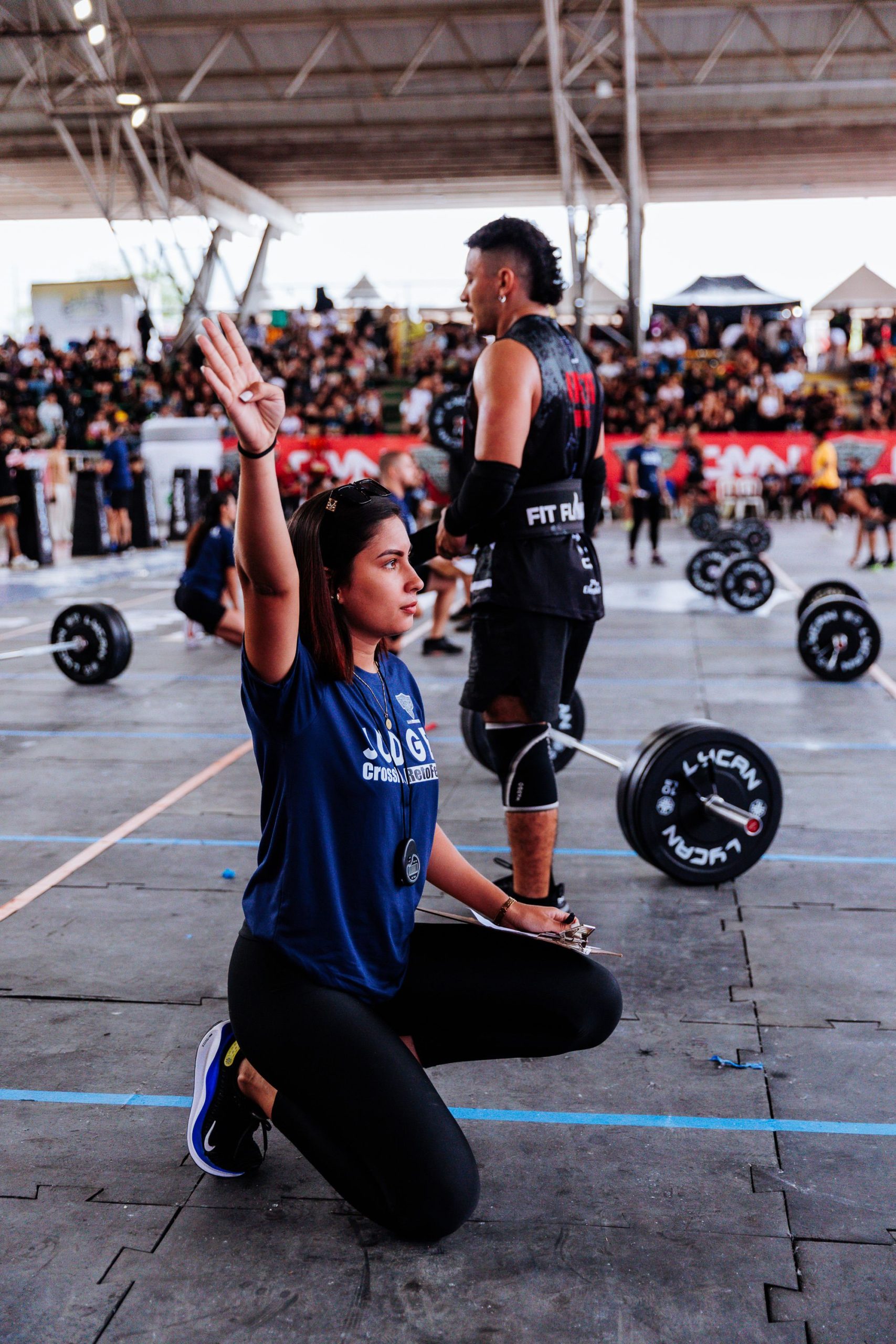
Start with one number, because it explains most of what follows: HYROX drew roughly 650 people to its first event in Hamburg in 2017. This season it expects around 1.5 million participants, and the 2026/27 calendar – 107 race weekends across six continents, finishing at the World Championships in Hong Kong – is built to carry that past two million. Co-founder Moritz Fürste has already said, out loud, that he thinks hybrid racing is on a credible path to becoming an Olympic discipline within a decade.
That single trajectory is reshaping everything else on this list, sometimes by pulling athletes toward it and sometimes by forcing older disciplines to react. My honest read: the headline trend of 2026 isn’t any one format, it’s how crowded the “prove you’re fit” market has suddenly become, and how unevenly that gold rush is landing across the sport.
HYROX isn’t just winning, it’s rewriting what “competitive fitness” means
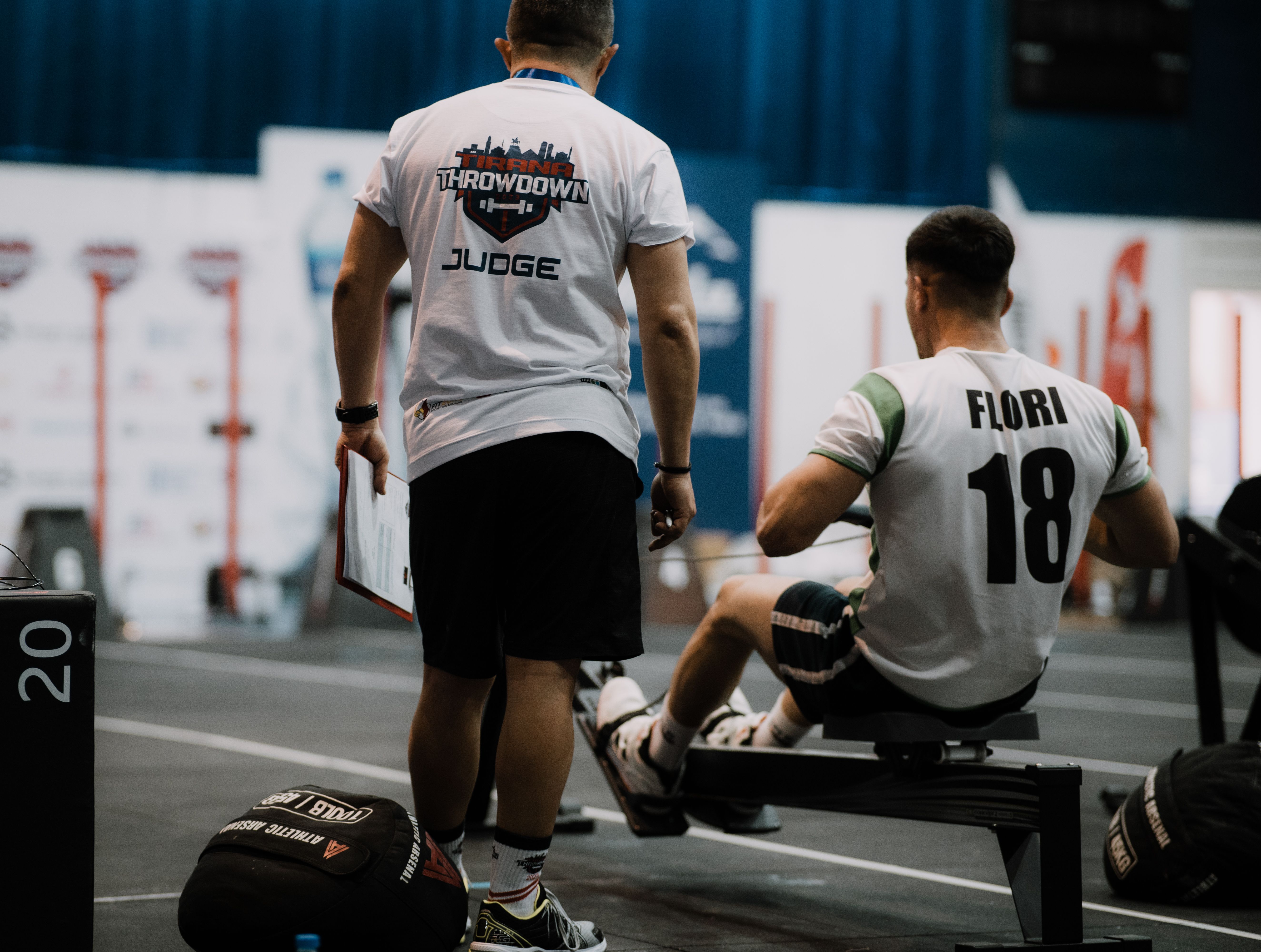
The format is deliberately boring, which is precisely the point: eight one-kilometer runs, each followed by a fixed functional station (SkiErg, sled push, sled pull, burpee broad jumps, rowing, farmer’s carries, sandbag lunges, wall balls), run in the same order at every race on the planet. There’s no surprise workout, no judging discretion, no “unknown and unknowable.” You know exactly what you’re training for, which is exactly what CrossFit – deliberately – never offered.
That standardization is also why the sport has become genuinely measurable. A 2026 longitudinal analysis in Frontiers in Physiology tracking seven competitive seasons of PRO and Elite results found male Elite median finishing times dropped from 1:06:24 to 0:57:17, with the field converging tightly at the top (performance variability more than halved). Running still eats about half of total race time across every season studied – more than any single station – which tells you plainly what actually wins races: an aerobic engine, not a big deadlift.
According to Fürste, the business side is scaling just as fast: a projected $270 million in 2026 revenue, roughly 16,000 affiliated gyms worldwide, and private equity firm L Catterton reportedly circling a stake in the company. Puma and Adidas are now in an open brand war over its shoes. None of that happens to a fad.
CrossFit didn’t die, but it did just rebuild the plane mid-flight
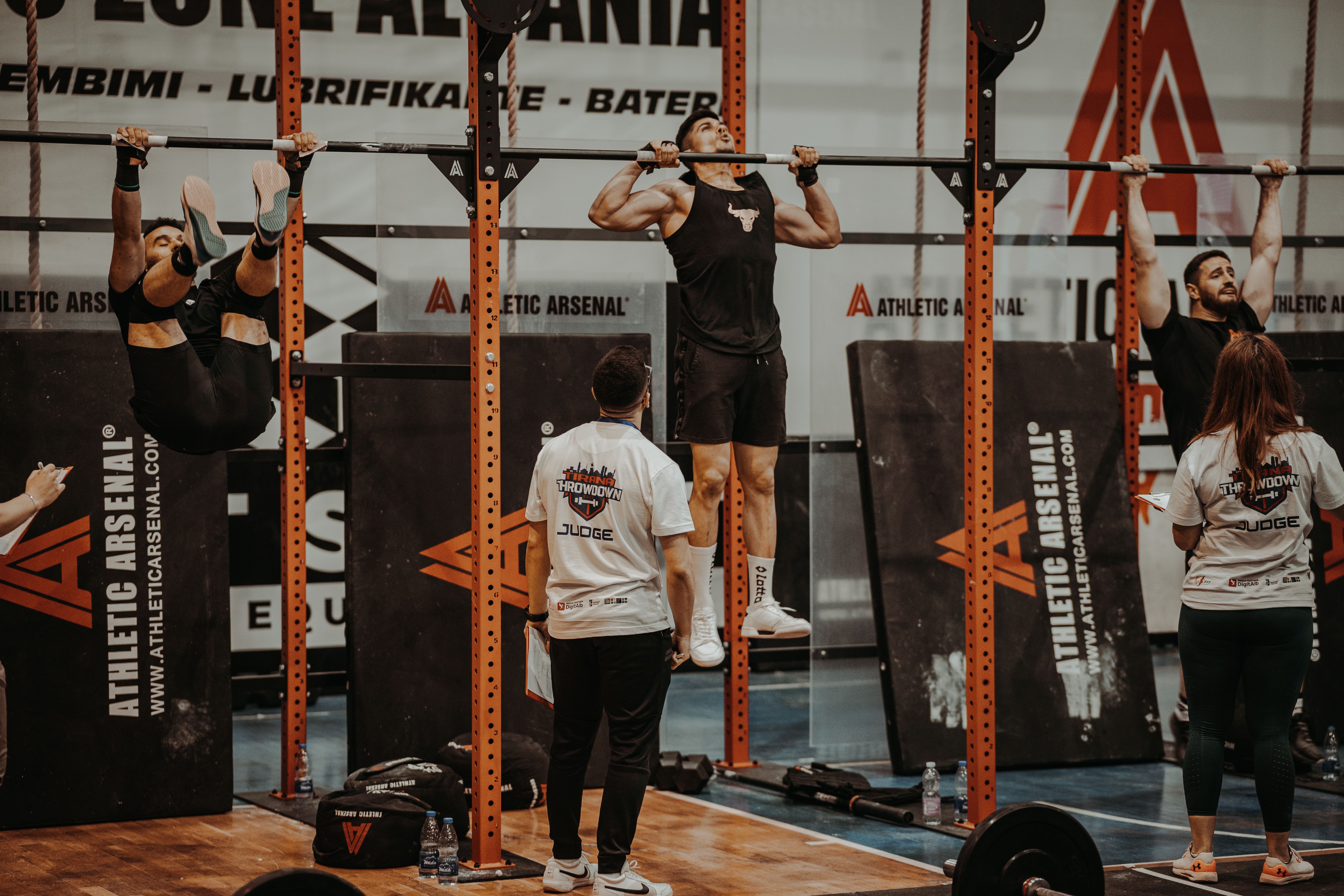
It’s easy to write CrossFit’s obituary in 2026 and it would be wrong. Yes, the brand went through real turbulence: CEO Don Faul departed in March, the company was reportedly shopping for a new owner, and Bruce Edwards – CrossFit’s former COO and a member since the Glassman era – stepped back in as CEO in May specifically to stop that sale process. Search interest and Open registrations have genuinely softened as HYROX has surged; one competitor-focused analysis claims CrossFit’s Open field shrank by roughly a third over recent seasons, though I’d treat that figure as directional rather than official, since CrossFit itself hasn’t published a comparable number.
What CrossFit actually did in response is the more interesting story. The 2026 CrossFit Games, the sport’s 20th anniversary edition, ran a record 20 scored events across three days at San Jose’s SAP Center – double the 2025 event count – specifically to reward athletes who stay consistent across accumulated fatigue rather than peaking for one brutal workout. Quarterfinals returned, age-group and team athletes got new live-qualifying paths through Semifinals, and the season is now run by WheelWOD instead of internally. It’s not a company folding; it’s a company that finally noticed it had competition.
The format wars: a lot of new brands chasing the same athlete
What’s genuinely new in 2026 is how many companies decided HYROX’s playbook was worth copying. Adidas-backed ATHX is running a 14-event European tour plus a Miami debut, built around a 2.5-hour, six-zone continuous event blending strength and metabolic conditioning. Xenom, backed by $15 million in funding and partnered with CrossFit itself, launched in Dallas in June as a two-day, 10-station “decathlon of fitness” aimed at CrossFit-style athletes rather than pure endurance racers. F45 launched Peak500 with Red Bull. Life Time’s LT Games returns for a second year. Even Crunch Fitness’s largest franchisee is running a multi-month “Conquer Challenge” across 100 locations.
| Format | Structure | Primary physical demand | 2026 signal |
|---|---|---|---|
| HYROX | 8km running + 8 fixed stations, 60–90 min | Sustained aerobic capacity under fatigue | ~1.5M athletes this season, 2M+ projected next |
| CrossFit Games | Constantly varied WODs, unannounced until race week | Broad work capacity, technical skill under stress | Record 20 scored events for 20th anniversary |
| ATHX | 2.5-hour continuous event, 6 zones | Strength, endurance and conditioning blend | 14-event European tour plus U.S. debut |
| Xenom | Two-day, 10-station scored competition | Elite CrossFit-style strength and gymnastics | Debuted June 2026 with $15M in funding |
| DEKA (Spartan) | Indoor, zone-based functional race | Varied strength and conditioning stations | Part of Spartan’s push into repeatable, gym-based formats |
Figures current as of August 2026, drawn from company statements and reporting by Athletech News, Men’s Health and SportsPro.
My honest opinion: most of these will not survive as standalone brands. There is only so much appetite for “run, then do a station, repeat,” and the market is currently testing five or six near-identical bets on the same hybrid-athlete customer at once. The ones with real distribution advantages – CrossFit’s affiliate network, Spartan’s event infrastructure, HYROX’s gym-licensing model – are the ones actually positioned to still be here in three years. A stadium event with no gym behind it is a much harder business to sustain, no matter how good the marketing looks in June.
Obstacle racing: two data sets, telling two different stories

This is where I think most 2026 trend roundups get lazy, because they just repeat whichever number the promoter handed out. Spartan’s own year-end release for 2025 reported 1.45 million finishers across 658 races in 25 countries – a genuinely huge figure, and by Spartan’s telling, proof the format is “stronger than ever.”
Independent tracking tells a messier story. The OCR Crew Newsletter’s own participation review, working from race-by-race data rather than aggregate press totals, found total OCR participation fell about 8.6% between 2023 and 2025, with international markets outside Australia trending down across the board (South America and Asia were hit hardest, down 35.4% and 27.3% respectively). Both things can be true at once: Spartan can post a record year in absolute finisher count while the broader OCR category it dominates is quietly shrinking per-event and losing ground internationally. Smaller, newer races like Savage Race and Tough Viking reportedly grew even as the giants plateaued – which suggests fatigue with the biggest brands specifically, not with mud and obstacles in general.
If you’re choosing where to spend a race budget this year, that distinction actually matters more than the participation totals themselves.
Every rep is now a data point

The American College of Sports Medicine ranked wearable technology as the number one fitness trend for 2026, and for competitive athletes specifically, the shift isn’t just “more people own a smartwatch.” It’s that heart rate variability, sleep staging and training-load scores have become the default inputs for daily programming decisions, at every level from national teams down to a Division II cross-country roster. U.S. retail sales of fitness trackers were up 88% year over year in 2025, and smart rings now account for 75% of that revenue, a genuine form-factor shift away from wrist-worn devices in barely three years.
Muscle oxygen monitors (NIRS), once a $10,000 lab tool, are now sub-$1,000 consumer devices being used by CrossFit and HYROX athletes to pace stations in real time. I’ll push back a little on the hype here, though: for a recreational competitor doing one or two races a season, an $850 muscle oxygen sensor is a worse investment than a coach who actually watches you train. The genuinely useful, evidence-backed layer for most people is still just HRV plus sleep tracking – the fancier sensors mostly help athletes who are already close to their ceiling find the last few percent.
Not every competitive-fitness trend is decided by a finish time or a leaderboard. Judged physique competitions belong in the same conversation because they turn training, nutrition, presentation and category-specific standards into a formal competitive result. The performance being assessed is different from HYROX, CrossFit or obstacle racing, but the underlying trend is the same: athletes are increasingly choosing structured formats with clear rules, specialized preparation and a defined pathway to competition.
The bodybuilding stage is quietly renegotiating what it rewards

Physique sport isn’t shrinking, but it is visibly reshuffling which categories promoters actually want to run. Several federations have introduced “Fit Model” or comparable divisions this season specifically to pull bodybuilding bikini judging back toward a leaner, less muscular, more “attainable” look, and competition coaches covering the 2026 season have noted callouts consistently rewarding softer conditioning over the driest, most striated physiques on stage – a real reversal from where the division was trending five years ago.
Women’s Bodybuilding, by contrast, is having a much harder season. New York Pro drew only three competitors in 2025, prompting fans to launch a GoFundMe to keep divisions like it alive at shows such as Tampa Pro and Chicago Pro after promoters started dropping the category. Six-time reigning Ms. Olympia Andrea Shaw, who is now promoting her own qualifier event, put the problem plainly in a recent interview with Muscle Insider: “Promoters need to know that you’re active. These different companies need to be able to look at your social media to see you actively competing and being engaged in the sport.” Sixteen contests will host the division in 2026, and it’s expanding into Brazil for the first time – genuine growth, just from a much smaller and more fragile base than bikini’s.
Strength sport’s quiet, unglamorous boom
While the hybrid-racing brands were raising funding rounds, raw powerlifting was posting the single most dramatic growth curve of any format on this list, without a marketing budget to speak of. A population-level study of the International Powerlifting Federation’s raw, drug-tested competitions found participation grew roughly 23-fold between 2012 and 2025 – from 1,319 unique lifters to 29,776 – with the number of sanctioned meets rising sevenfold over the same window. Female participation climbed from about 22% to roughly 32% of entrants and has held steady there for nearly a decade.
The catch, and it’s a real one: careers are short. The median lifter competes exactly twice before stopping, and nearly half never come back for a second meet. That’s a very different growth pattern than HYROX’s, which is explicitly built around repeat racing and year-round training-club membership. Powerlifting is pulling in enormous numbers of first-timers; it just hasn’t solved retention the way the venture-backed hybrid formats have.
Masters and age-group divisions are the one place every strength discipline agrees is expanding: USA Weightlifting is combining its Masters and National University Championships for the first time in 2026, British Weight Lifting’s masters championships are growing alongside Commonwealth Games qualifying, and Powerlifting America’s Age Division Nationals now run entirely separate qualifying tracks for lifters into their 70s and 80s. If there’s one demographic story tying every discipline in this article together, it’s that competitive fitness has quietly stopped being something you age out of.
So which trend actually matters?
If you’re deciding where to put your training time in 2026, I’d ignore the growth charts and ask a much narrower question: what specific physical stimulus do you actually want more of? HYROX rewards a boring, patient aerobic engine and punishes anyone who redlines early. CrossFit still rewards broad, unpredictable work capacity and technical skill under fatigue. Powerlifting and Olympic weightlifting reward raw, measurable strength with almost no endurance demand at all. Physique sport rewards a specific, judged aesthetic that has nothing to do with performance in the other three. These are not the same sport wearing different jerseys, whatever the marketing for any given new brand tells you, and D’Hulst’s warning to CrossFit athletes chasing a HYROX taper – that months spent building one engine can actively cost you the other – applies just as well across every pairing on this list.
What would change my mind about the fragmentation argument: if two or three of the newer format brands (ATHX, Xenom, DEKA) are still running full calendars in 2028 without needing fresh funding rounds to survive. That’s the actual test of whether 2026 was a genuine sport being born or a very well-marketed bubble.
Quick answers to the questions this raises
Is HYROX actually harder than CrossFit? They’re not comparable on a single difficulty scale – HYROX is aerobic-dominant and skill-light, CrossFit is technically demanding but far shorter in duration. Most athletes who are strong in one struggle badly in the other for the first several months.
Is obstacle course racing dying? No, but it is consolidating. The biggest legacy brands are seeing softer per-event numbers in several markets even as smaller regional races grow, so “OCR” as a category is healthier than any one company’s trend line suggests.
Will hybrid racing make the Olympics? Not confirmed, but HYROX’s own leadership is actively campaigning for it, and obstacle racing already has a foothold via modern pentathlon changes slated for 2028 – worth watching, not betting on yet.
How this article was put together: figures and claims above were checked against reporting from Athletech News, Men’s Health, CNBC, SportsPro, Forbes Australia, the OCR Crew Newsletter, Muscle Insider and a peer-reviewed Frontiers in Physiology analysis, all published or updated between January and August 2026. Where sources disagreed – most notably on obstacle racing participation – both figures are presented rather than picking a winner. Fast-moving figures like HYROX’s projected 2026/27 participation and revenue are company projections, not audited totals, and should be rechecked closer to season’s end.